Complaints Procedure for Office Clearance Yiewsley Services
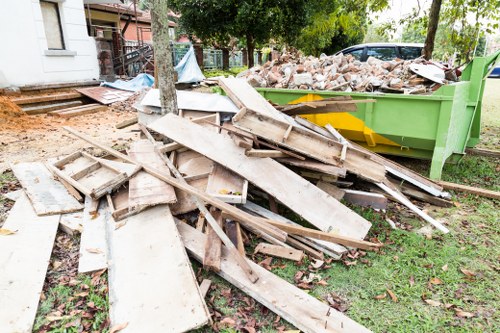 Purpose: This procedure explains how Office Clearance Yiewsley and related clearance services manage, investigate and resolve complaints about rubbish removal, commercial clearance and business waste handling. It is intended to provide a clear, fair and timely process so that concerns are handled respectfully and consistently. The aim is to restore service standards and, where appropriate, offer remedies that reflect the nature of the issue.
Scope: This policy applies to all aspects of office and commercial clearance work, including debris removal, furniture disposal, recycling segregation and site clearance operations. It covers complaints from customers, third parties and internal stakeholders about service delivery, staff conduct, damage, missed collections, safety breaches and environmental concerns. All complaints are treated seriously and will be handled without prejudice.
 How to raise a complaint: Complaints can be submitted through the organisation's standard channels. When raising a concern, please provide: a clear description of the issue, dates and times, location details relevant to the job, any supporting evidence such as photographs, and preferred outcome. Complaints should be made as soon as reasonably possible after the event so that evidence and witness recollections remain available.
Acknowledgement and Initial Response
On receipt of a complaint, an acknowledgement will be issued promptly. The acknowledgement will confirm that the complaint has been logged and outline the next steps, including the expected timeframe for a substantive response. Initial assessments determine whether the matter requires immediate action for safety or environmental risk, in which case interim measures may be taken to secure the site or prevent ongoing harm.The standard timescales for handling complaints are set to provide reasonable opportunity for investigation while balancing the need for a timely outcome. Typical stages include:
- Initial acknowledgement within a short period;
- Investigation and fact-finding within a defined working timeframe;
- Formal response setting out findings and proposed resolution.
Investigation Process
Investigations are objective and proportionate. The investigation will consider operational logs, crew notes, contractual terms, photographic evidence and any relevant waste transfer documentation. Staff involved in the job may be interviewed, and third-party evidence will be sought where relevant. Confidentiality is maintained during the investigation to protect personal data and commercial sensitivities.
Outcomes and Remedies
Following investigation, outcomes may include: an explanation of findings, an apology, remedial work or repeat clearance, financial adjustments where appropriate, or other specific actions to rectify identified failures. Remedies are proportionate to the impact of the issue. The organisation records the chosen remedy and monitors completion to ensure the matter is satisfactorily closed.Resolution communication will set out the reasons for decisions and, where applicable, the steps taken to prevent recurrence. If operational failures are identified, management will review procedures and training to address root causes. Strong emphasis is placed on learning from complaints to improve service delivery for future jobs.
Confidentiality and Data Handling
Personal data and case details are handled in accordance with data protection obligations. Information gathered during complaint handling is restricted to those directly involved in the investigation and resolution. Records are retained for an appropriate period to support audit and continuous improvement, and are protected from unauthorised access.Escalation If the complainant is not satisfied with the initial outcome, there is an internal escalation route for an independent review by senior management. The escalation will be acknowledged and considered by a reviewer who was not involved in the original decision. The escalation process aims to provide an impartial reassessment and confirm whether the original outcome was appropriate.
 Independent review mechanisms may apply for particularly complex or high-value disputes. The internal review will re-examine the evidence, review corrective actions taken and may propose alternative remedies if justified. The organisation endeavours to conclude escalations within a reasonable period while ensuring a thorough and fair reassessment.
 Monitoring, training and continuous improvement: Complaints data is analysed for trends and recurring themes. Findings feed into training programmes, operational updates and contractor briefings to reduce repeat incidents. The organisation commits to regular reviews of the complaints process itself to ensure it remains effective and accessible.
Record-keeping and Transparency: A clear audit trail is kept for each complaint, documenting the allegation, investigative steps, correspondence, findings and final outcome. While individual case details are confidential, aggregate statistics and learning outcomes are used to inform policy adjustments and service development. This supports transparency and accountability without disclosing private details.
Rights and expectations: Complainants can expect respectful treatment, timely updates and clear explanations of decisions. The procedure is designed to be fair to both customers and service teams, balancing the need for resolution with operational realities. All parties are encouraged to participate cooperatively in the process to achieve the best possible outcome.
Review and amendment: This complaints procedure is subject to periodic review to reflect legislative changes, operational learning and stakeholder expectations. Amendments are made to improve clarity, effectiveness and fairness. The organisation is committed to maintaining a robust complaints framework that supports high standards in office clearance, commercial rubbish removal and related services.
