Office Clearance Yiewsley — Health & Safety Policy
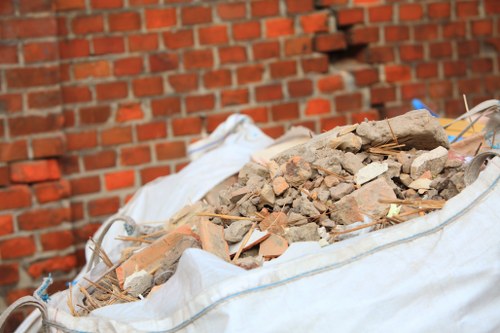 Purpose: This Health and Safety policy sets out the commitment of the office clearance operation to protect staff, contractors and members of the public during all stages of commercial and domestic waste removal, including rubbish collection and rubbish removal activities. The policy applies to every task carried out by the team and outlines responsibilities, control measures and monitoring procedures to ensure safe delivery of the rubbish company service area duties.
Policy statement: The organisation will take reasonable steps to prevent injury and ill health by integrating safe systems of work into everyday processes. This includes risk assessments for bulky office waste, electrical items, and hazardous materials, and ensuring that waste clearance and waste removal activities are planned and supervised to minimise harm.
 The policy covers:
- All personnel engaged in office clearance and commercial rubbish disposal.
- Use of company vehicles and plant used for refuse collection and furniture removal.
- Temporary storage and handling of materials awaiting disposal or recycling.
Scope, Roles and Responsibilities
The policy applies across the entire service remit of the office clearance crew. The employer retains overall responsibility for health and safety, while managers are responsible for implementing and enforcing procedures for waste clearance and removal. Employees and contractors must follow safe working practices, report incidents promptly and use issued personal protective equipment.
Key duties
Managers and supervisors will:- Conduct and record risk assessments for each job, including manual handling and hazardous item identification.
- Ensure appropriate training and competence for staff tasked with commercial rubbish clearance.
- Arrange and maintain emergency procedures such as spill response and first aid.
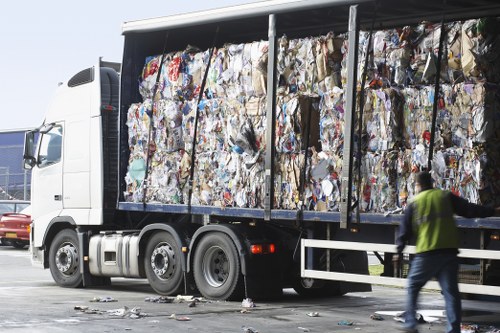
Contractors and sub-contracted rubbish collection partners must meet minimum safety standards as a condition of engagement and supply evidence of relevant training and insurance. All teams must sign in at sites, follow site-specific rules and use secure lifting techniques to control manual handling risks.
Risk Management and Controls
Risk assessments form the backbone of safe waste removal and the rubbish company's operations. Common hazards include sharp objects, unstable loads, hazardous substances found during office clearance and vehicle movements. Controls include eliminating hazards where possible, substituting unsafe practices, and engineering and administrative measures to mitigate remaining risks.
 Operational controls include:
- Mandatory use of PPE such as gloves, high-visibility clothing and safety footwear.
- Safe loading and securement procedures for vans and welfare of drivers during rubbish collection runs.
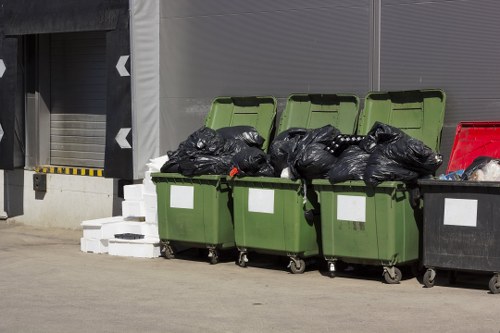
- Segregation and correct packaging of hazardous materials prior to transfer to authorised disposal or recycling facilities.
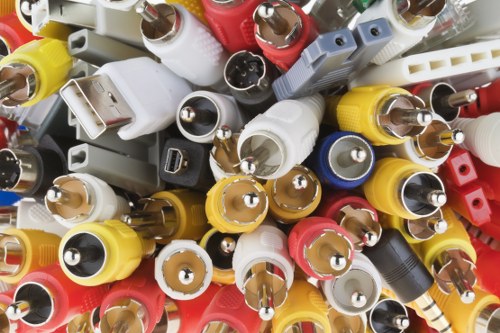 Training and competence are essential. Staff undertaking office clearance are given specific instruction on manual handling, use of trolleys and lifting aids, and recognition of potentially hazardous items like batteries or electronics. Regular refresher sessions and toolbox talks maintain awareness of safe practices in the rubbish removal and waste removal environment.
Operational Safety and Environmental Considerations
Vehicles and equipment used in the rubbish company service area are maintained to a high standard and subject to regular inspections. Vehicle safe loading limits are observed, and drivers follow safe driving policies to reduce risks while collecting and transporting waste. The organisation also promotes recycling and sustainable disposal methods as part of environmental protection obligations.
Emergency procedures are established, including spill containment, reporting of dangerous finds and first aid arrangements. All incidents, near misses and unsafe conditions must be reported promptly and investigated proportionately to prevent recurrence. The organisation will take corrective action where necessary and update procedures accordingly.
Monitoring and review are continuous. The policy will be reviewed annually or sooner if there are significant changes to operations, legislation or following a serious incident. Performance indicators include training completion, incident statistics, audit outcomes and the effectiveness of control measures across the office clearance service.
Commitment and Continuous Improvement
Commitment: Senior management endorses this policy and will provide the necessary resources to implement it. Everyone involved in commercial rubbish clearance and office removal tasks is expected to take personal responsibility for safety and co-operate fully with the measures set out in this policy.
Review process: The policy is a living document. It will be updated in line with operational changes, industry best practice and audit findings. Staff participation in safety improvement is encouraged through established reporting channels and regular safety meetings.
Conclusion: This Health and Safety policy provides a practical framework for safe operation of office clearance activities within the listed service area, emphasising prevention, training and continual improvement to protect people and the environment during all rubbish company and waste removal operations.
